There is a assumption baked into most web design conversations that more pages means more professional. A homepage, about page, services page, gallery, testimonials, contact. The full set. For some businesses that structure makes sense. For a lot of small and micro businesses, it is unnecessary, and in some cases it actively gets in the way.
Here is when a one-page website is genuinely the right call, and when it is not.
What a one-page website actually is
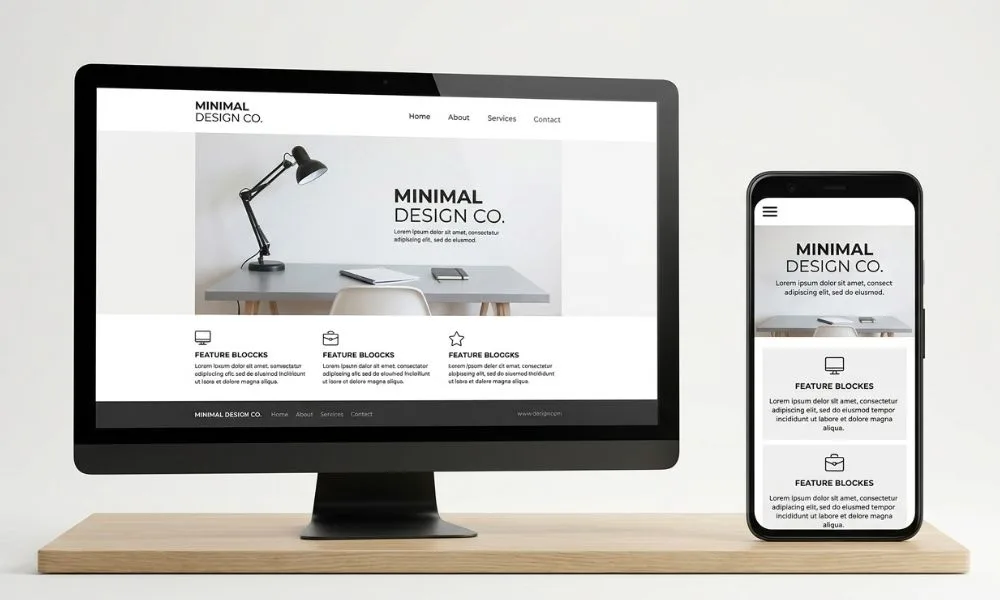
A one-page site puts everything on a single scrollable page. Your intro, what you do, where you cover, maybe a few photos or reviews, and a way to get in touch. Visitors do not click between pages. They scroll, find what they need, and either contact you or leave.
Done well, it is clean, fast, and direct. Done badly, it is a wall of text with no structure. The difference is in how the content is organised, not how many pages there are.
When one page is genuinely enough
You offer one clear service
A window cleaner, a mobile dog groomer, a driving instructor, a sole-trader plasterer. If you do one thing in one area and customers just need to know you exist, what you charge roughly, and how to reach you, one page covers it. Adding more pages does not add clarity. It adds clicks between a customer and your phone number.
You are just getting started
Getting online matters more than getting online perfectly. A well-built one-pager live today beats a five-page site you are still tweaking in three months. It gives you something to point people to, something to put on business cards, and something that shows up when someone Googles your name.
For new businesses in Stoke-on-Trent, the free one-page website offered by DesignedByStu each month exists precisely for this reason. Get online first, grow the site later if you need to.
You get most of your business through referrals or social media
If your customers come through word of mouth, Facebook, or Instagram, your website is mainly doing a credibility check. Someone gets a recommendation and Googles you to confirm you are legitimate. For that job, one page with your services, a couple of photos, and a contact number is plenty.
When one page is not enough
You want to rank on Google for multiple services or locations
This is the main limitation. Google ranks pages, not websites. If you want to appear in search results for "electrician Stoke-on-Trent" and also "electrician Newcastle-under-Lyme" and also "fuse board upgrade Staffordshire", you need separate pages for each. A one-pager cannot do that work. It gives Google one set of signals instead of several.
If local SEO is part of your growth plan, you will outgrow a one-page site fairly quickly. The £99 monthly plan covers up to ten pages, which gives you the room to build that structure properly.
You have multiple distinct services that need explaining
A builder who does extensions, loft conversions, new builds, and commercial fit-outs has too much to cover on one page without it becoming overwhelming. Each service probably has different customers with different questions. Separate pages let you speak to each of them properly.
You want to add a blog
Blog content is one of the most effective ways to build long-term Google visibility. It cannot live properly on a one-page site. If content marketing is part of your plan, you need a multi-page setup from the start.
The honest take
A one-page website is a starting point, not a ceiling. For the right business at the right stage, it is the most sensible thing to launch. For a business with growth ambitions and multiple services, it will become a constraint within the first year.
Know which one you are before you decide. If you are not sure, have a conversation about it before committing to either.
Need a website for your business?
Monthly packages from £99. Live in 1 week. No upfront costs.
View packages →