The client
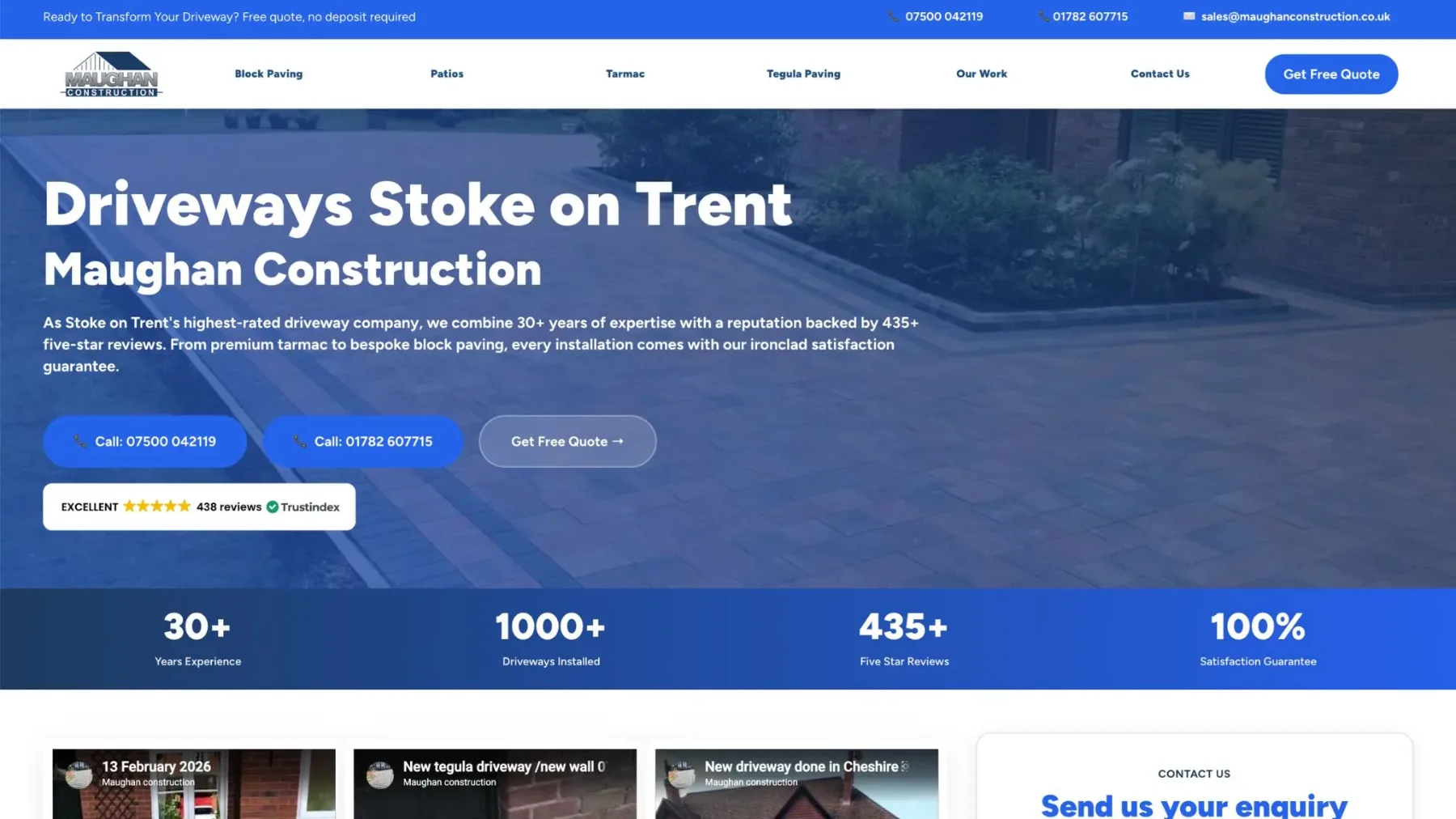
Maughan Construction install tarmac driveways, block paving, tegula paving and patios across Stoke-on-Trent, Newcastle-under-Lyme, Stafford, Crewe and the surrounding Staffordshire and Cheshire towns. The business itself needed no help. Thirty years of trade experience, more than 400 five-star Google reviews, and a no-deposit-until-satisfied policy that most competitors will not match. The website was the weak link. Plenty of authority, almost none of it pointing in the right direction.
The problem
When I took the project on, the site had three issues holding it back.
First, keyword cannibalisation. A collection of legacy location pages were all competing for the same local search terms, so Google could not settle on which page to rank. Positions bounced around and core local rankings had dropped as a result.
Second, internal link equity was pooling in the homepage. The service pages, the ones that actually convert visitors into quote requests, were stranded in the mid-30s because nothing on the site was passing authority to them.
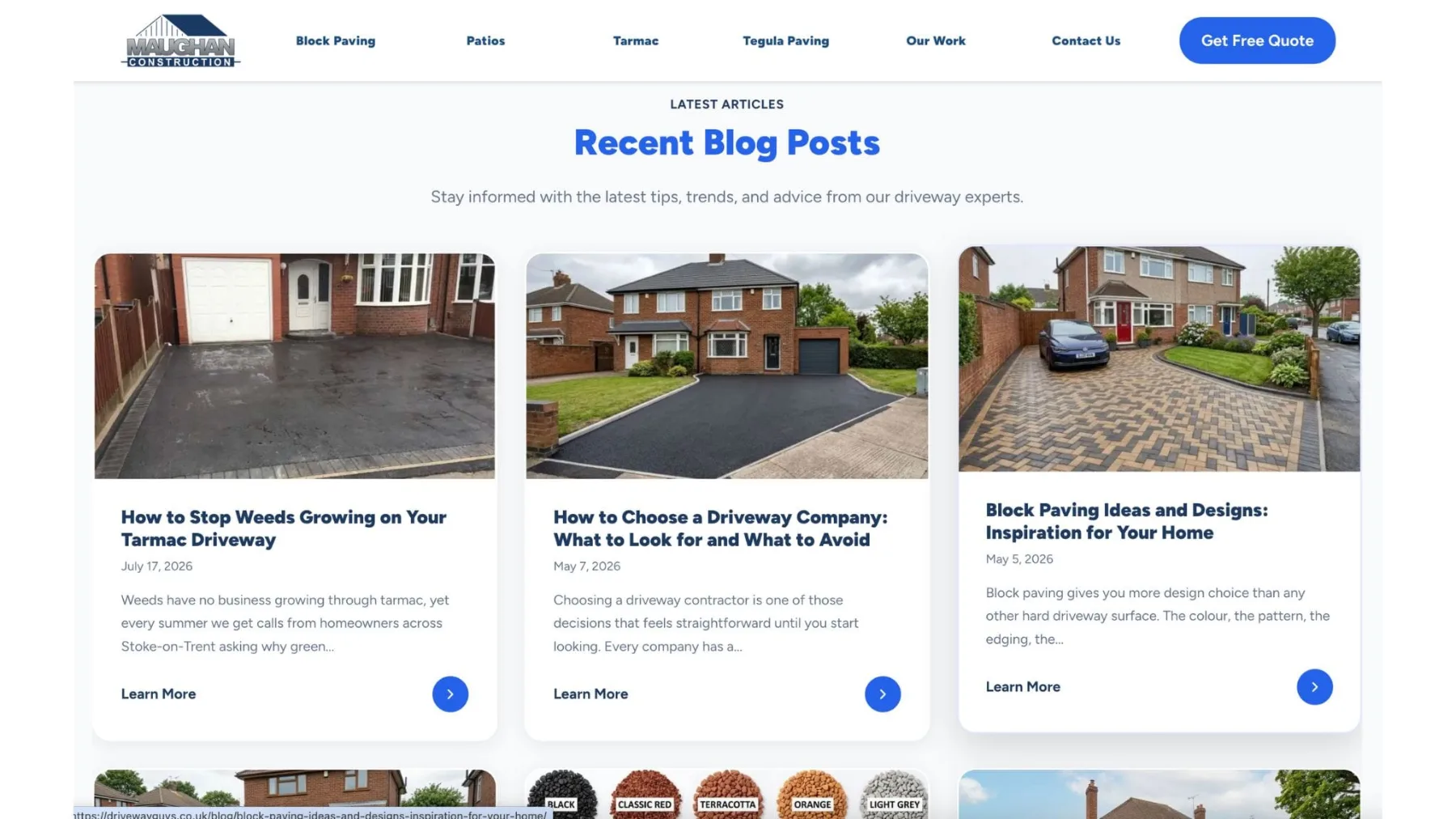
Third, there was no content. Search demand existed for dozens of commercial and informational terms around tarmac costs, block paving, coloured tarmac and local installation queries, and the site was invisible for nearly all of them.
What I did
The technical fixes came first. I consolidated the competing legacy pages with 301 redirects, which resolved the cannibalisation and gave Google one clear page per target term.
Then content, at scale. I researched and planned a 28-post programme built around keyword clusters rather than one-off articles: a tarmac cluster, a block paving cluster, a coloured tarmac recovery cluster, and dedicated local posts for every town the business serves. Posts went live every two days for eight weeks, and the programme has since grown past 38 published articles.
Every post was written with internal linking as a first-class concern, not an afterthought. Later articles link back to earlier ones in the same cluster, and the whole structure routes authority towards the service pages using commercial local anchor text. The final post in the programme, a guide to choosing a driveway company, was deliberately held until last so it launched with maximum internal link equity already behind it.
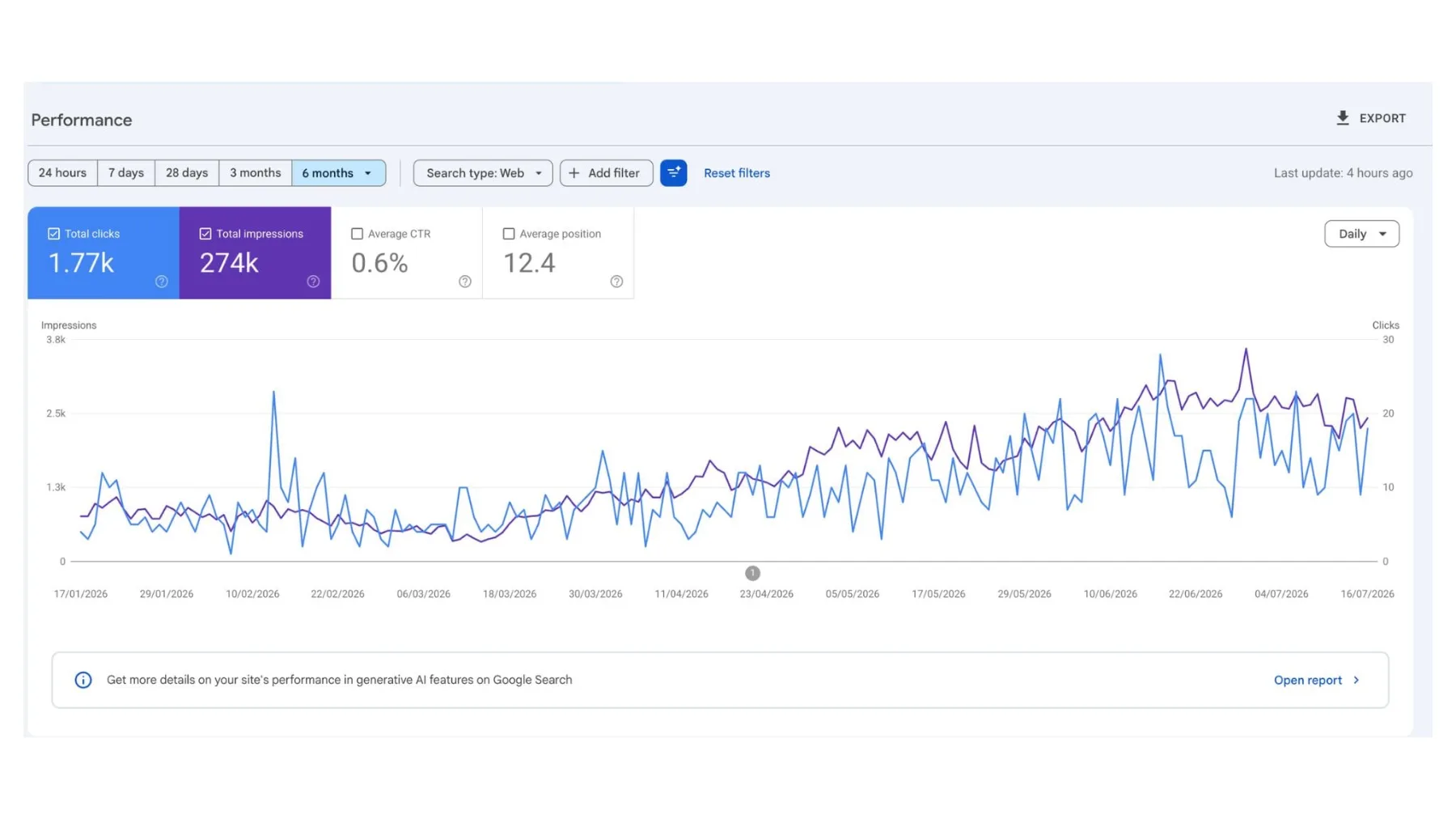
Alongside the content, I run ongoing rank tracking against the main local competitors, with Google Search Console as the ground truth for position data. That monitoring has already flagged a new competitor entering the local market, which shaped where the next round of work is focused.
The results
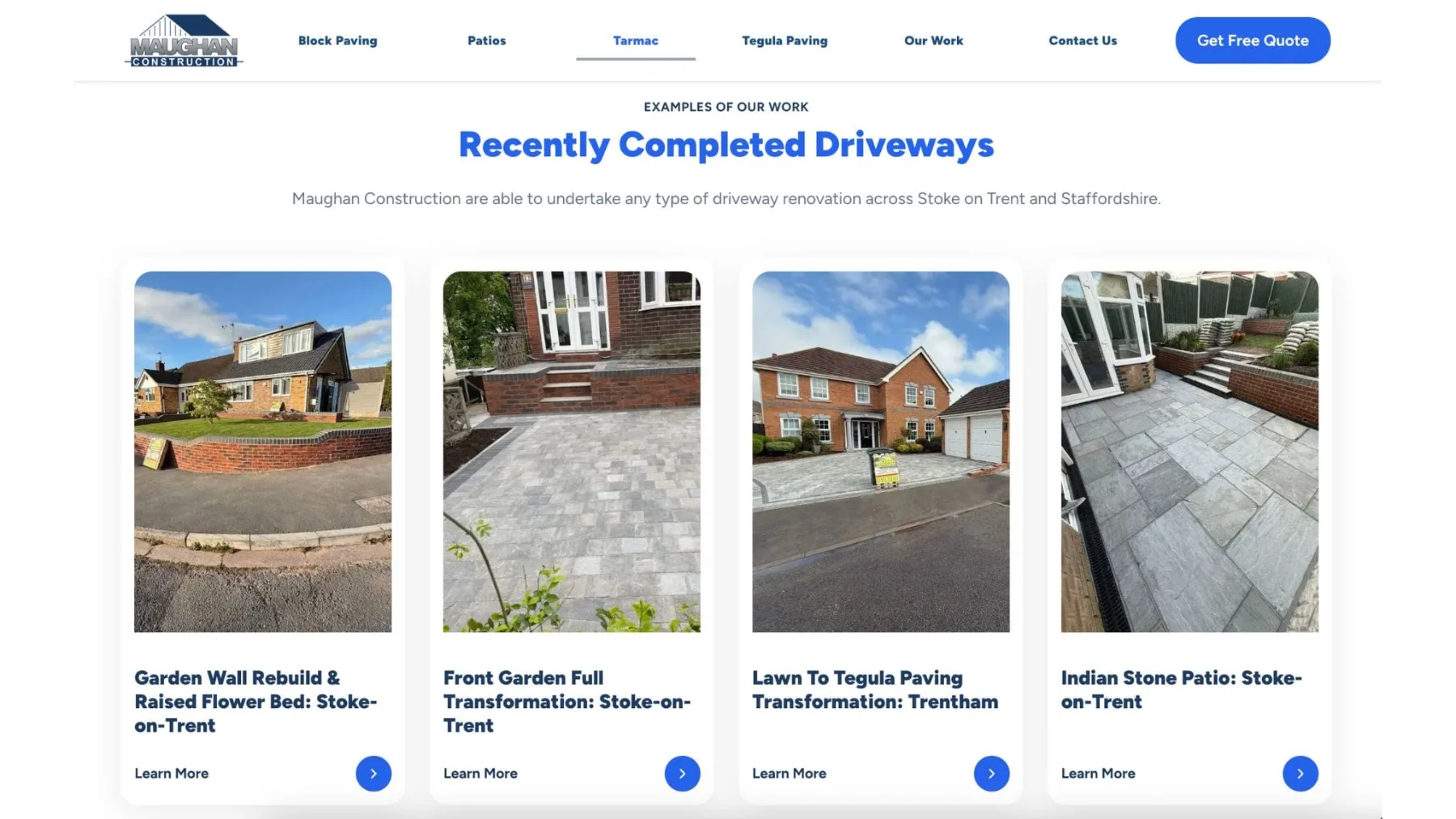
The cannibalisation is fixed and core local terms have stabilised on single, dedicated pages. The blog has gone from nothing to the most comprehensive driveway content library in the area, covering costs, materials, maintenance and every major town in the service area. Service pages that were buried in the 30s now have a proper internal linking structure feeding them, and the Google Business Profile, which drives the actual phone calls, is supported by a consistent flow of content and reviews.
This is a live, ongoing project. The current focus is pushing the Crewe and Newcastle-under-Lyme landing pages up the local results, where the competitive gap is widest.
The takeaway
Local trades do not win on content volume alone. They win when technical structure, internal linking and local signals all point the same way. Maughan Construction had the reputation. My job was making sure Google could see it. If your business is in the same position, my SEO services for Staffordshire businesses follow the same approach.
Need this kind of work for your trade business? Get in touch through the contact page.
Need a website for your business?
Monthly packages from £99. Live in 1 week. No upfront costs.
View packages →